Storm fronts on the march
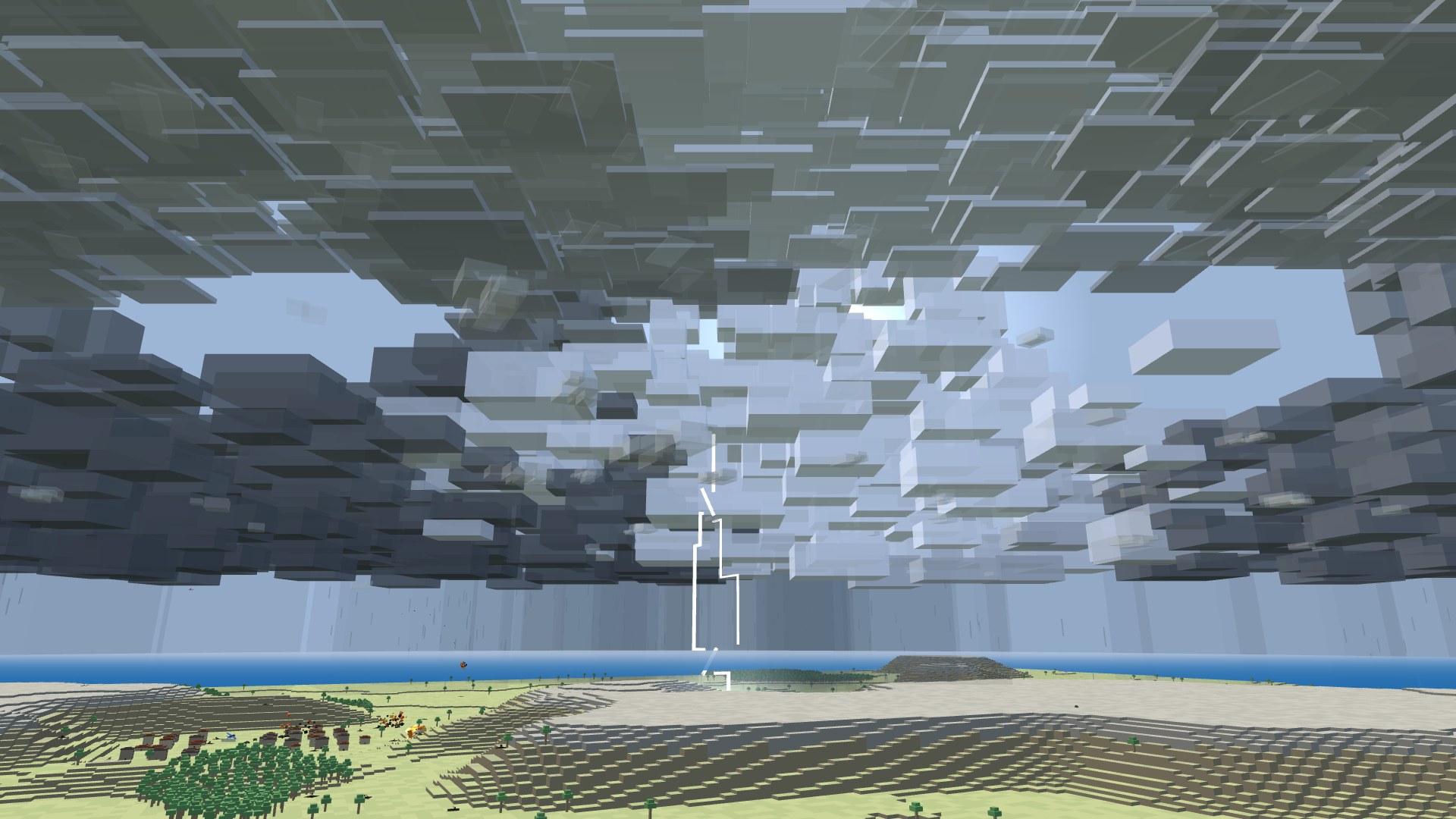
Storm rounds used to be a mood — the sky went gray, the fog closed in, the wind picked up. Now the storm is a thing you fly through: a line of anvil-topped thunderheads that walks across the map over the round, flickering from inside, cracking lightning down at its leading edge, dragging curtains of rain across the sea and the grass. When it catches you, it's the whole world for a few minutes.
One sky, and everyone shares it
When the storm rolls over your wingman, it rolls over you. The bolt he sees is the bolt you see, on the same beat, from your own angle — the front is a single weather system marching over the whole battle, not a private effect on each screen. Duck under the anvil to break someone's line of sight and he's ducking under the same cloud you are.
Rare enough to be an event
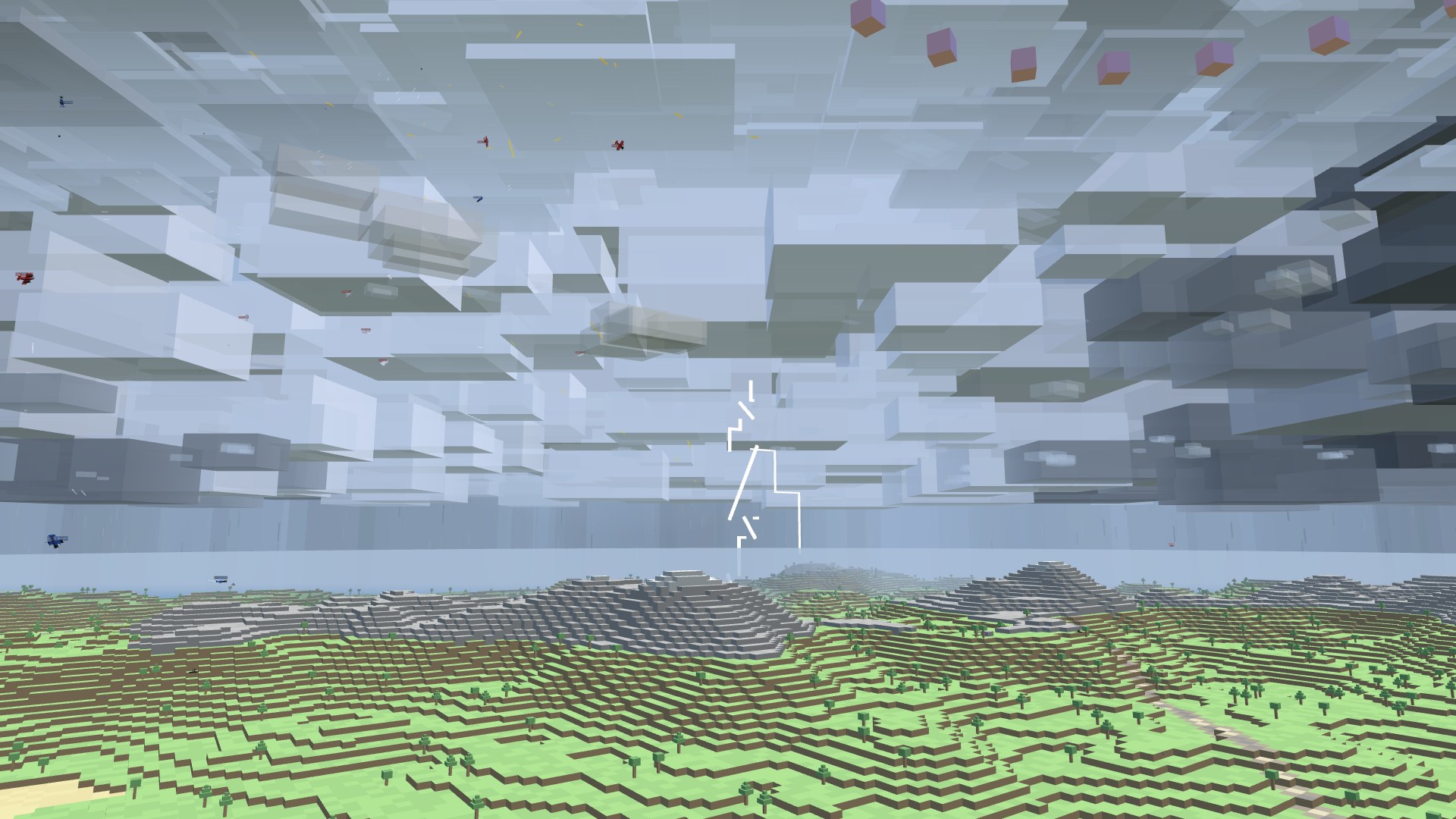
Storms shouldn't wallpaper the war, so they don't roll every round — you'll fly into a real front about one round in five, with clear skies and dawn light the rest of the time. That makes a storm something you remember: the round the whole squadron fought a knife-fight inside the rain, the round the fleet closed under cover of the cloud. And the weather rolls fresh every round now on every front — air, sea, and land all get their own sky each time out, instead of being stuck with whatever it was.
What it's like inside
The front is a continuous wall of cloud — a ragged black base and one connected anvil ceiling streaming forward the way the storm marches. Rain drags down in shafts beneath it; a faint gray veil around it makes the downpour readable from kilometres out; and the deeper you push in, the tighter the fog closes, until you're fighting at knife range and trusting your ears. It reads as weather, not scenery: dense, dark, and moving.
The lightning comes in three kinds. Most of the time the storm's belly glows and gutters somewhere along the line, lighting the clouds from within. Every so often a cloud-to-cloud arc crawls between two cells, a jagged horizontal stroke that flares them both at once. And now and then a ground bolt drops from the cloud base to the actual terrain — striking hilltops and water where they really are, biased toward the leading edge the storm is walking toward. The bolt is drawn the way everything in this world is: hard-edged boxes, vertical drops, right-angle jogs, one forked branch dying in the air — pixel lightning over pixel terrain. Each strike floods the whole scene cold blue-white for a heartbeat, and the thunder arrives late: a hard crack when it's on top of you, a long grumble seconds after the flash when it's two kilometres off. Count the gap and you know how far away the storm is.